Publications
Papers
16 papers on gesture and action recognition, 6-DoF pose estimation, visual tracking and multimedia, 2011–2020.
2020
-
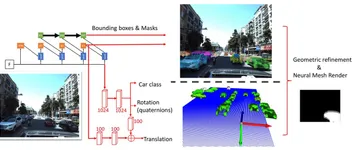
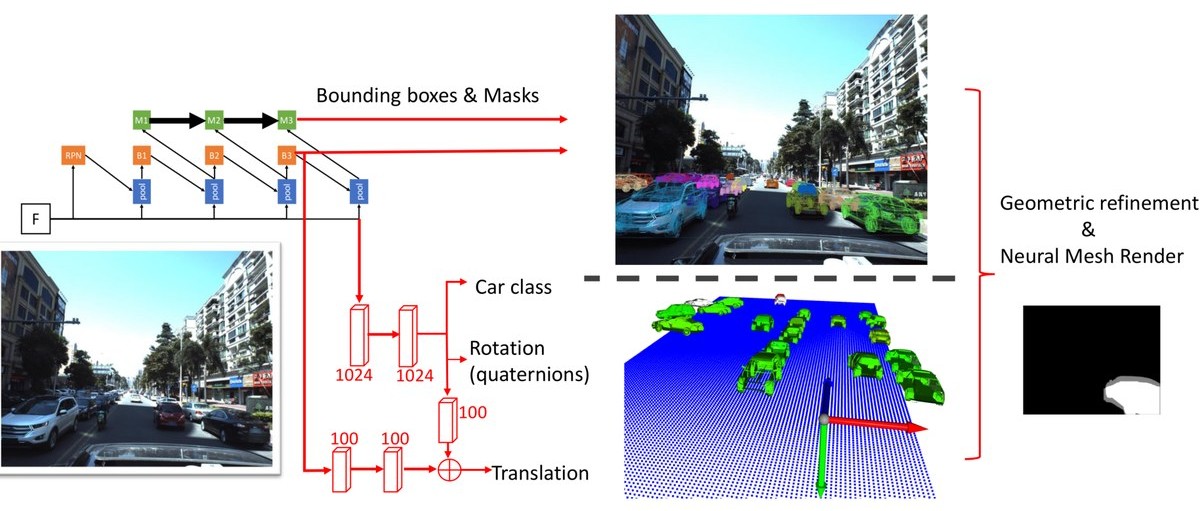
Neural Mesh Refiner for 6-DoF Pose Estimation
arXiv 2020
Abstract
How can we effectively utilise the 2D monocular image information for recovering the 6D pose (6-DoF) of the visual objects? Deep learning has shown to be effective for robust and real-time monocular pose estimation. Oftentimes, the network learns to regress the 6-DoF pose using a naive loss function. However, due to a lack of geometrical scene understanding from the directly regressed pose estimation, there are misalignments between the rendered mesh from the 3D object and the 2D instance segmentation result, e.g., bounding boxes and masks prediction. This paper bridges the gap between 2D mask generation and 3D location prediction via a differentiable neural mesh renderer. We utilise the overlay between the accurate mask prediction and less accurate mesh prediction to iteratively optimise the direct regressed 6D pose information with a focus on translation estimation. By leveraging geometry, we demonstrate that our technique significantly improves direct regression performance on the difficult task of translation estimation and achieve the state of the art results on Peking University/Baidu - Autonomous Driving dataset and the ApolloScape 3D Car Instance dataset.
2019
-
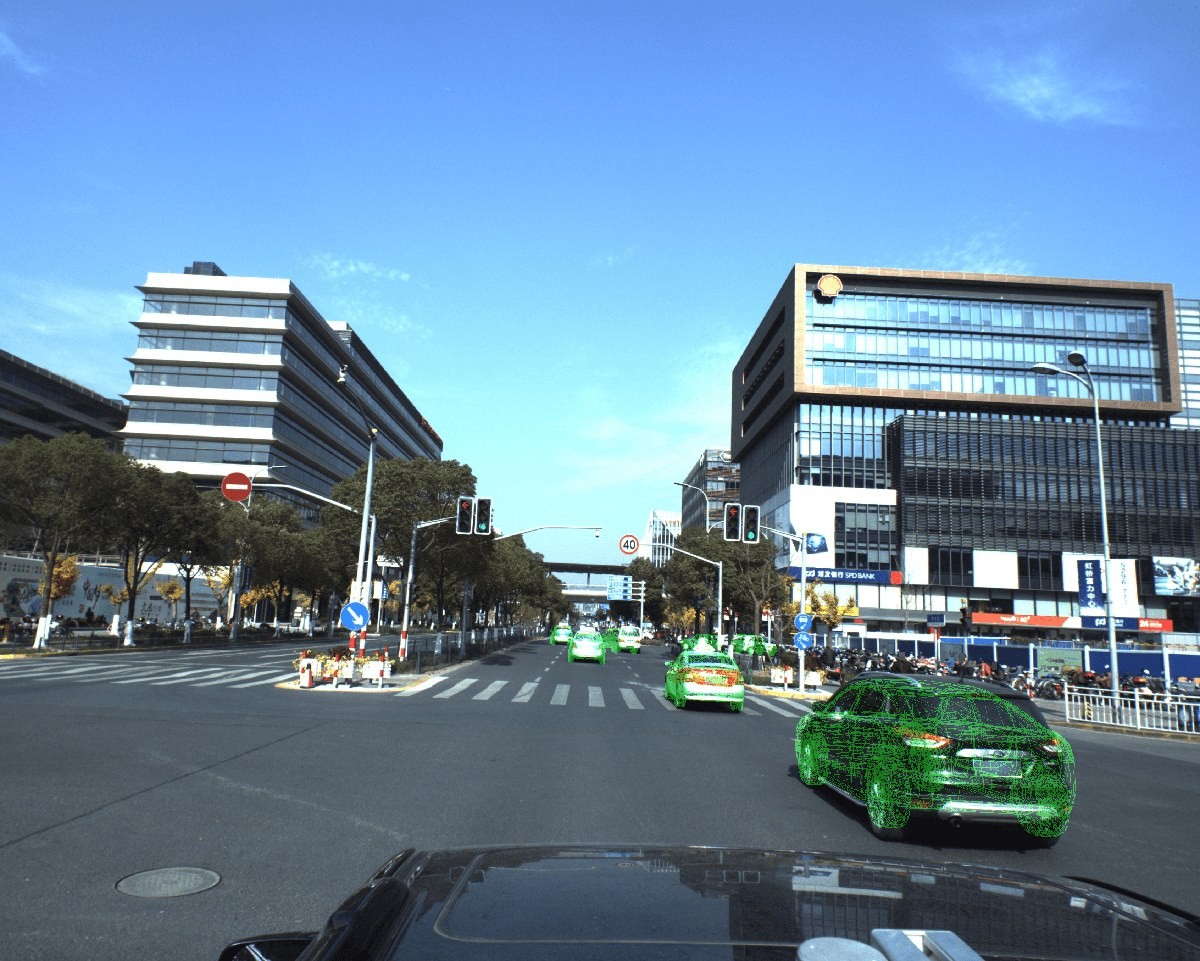
6D-VNet: End-to-end 6-DoF Vehicle Pose Estimation from Monocular RGB Images
CVPRW 2019
Abstract
We present a conceptually simple framework for 6DoF object pose estimation, especially for autonomous driving scenario. Our approach efficiently detects traffic participants in a monocular RGB image while simultaneously regressing their 3D translation and rotation vectors. The method, called 6D-VNet, extends Mask R-CNN by adding customised heads for predicting vehicle's finer class, rotation and translation. The proposed 6D-VNet is trained end-to-end compared to previous methods. Furthermore, we show that the inclusion of translational regression in the joint losses is crucial for the 6DoF pose estimation task, where object translation distance along longitudinal axis varies significantly, e.g., in autonomous driving scenarios. Additionally, we incorporate the mutual information between traffic participants via a modified non-local block. As opposed to the original non-local block implementation, the proposed weighting modification takes the spatial neighbouring information into consideration whilst counteracting the effect of extreme gradient values.
2017
-
Kernalised Multi-resolution Convnet for Visual Tracking
CVPRW 2017
Abstract
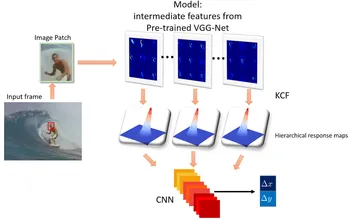
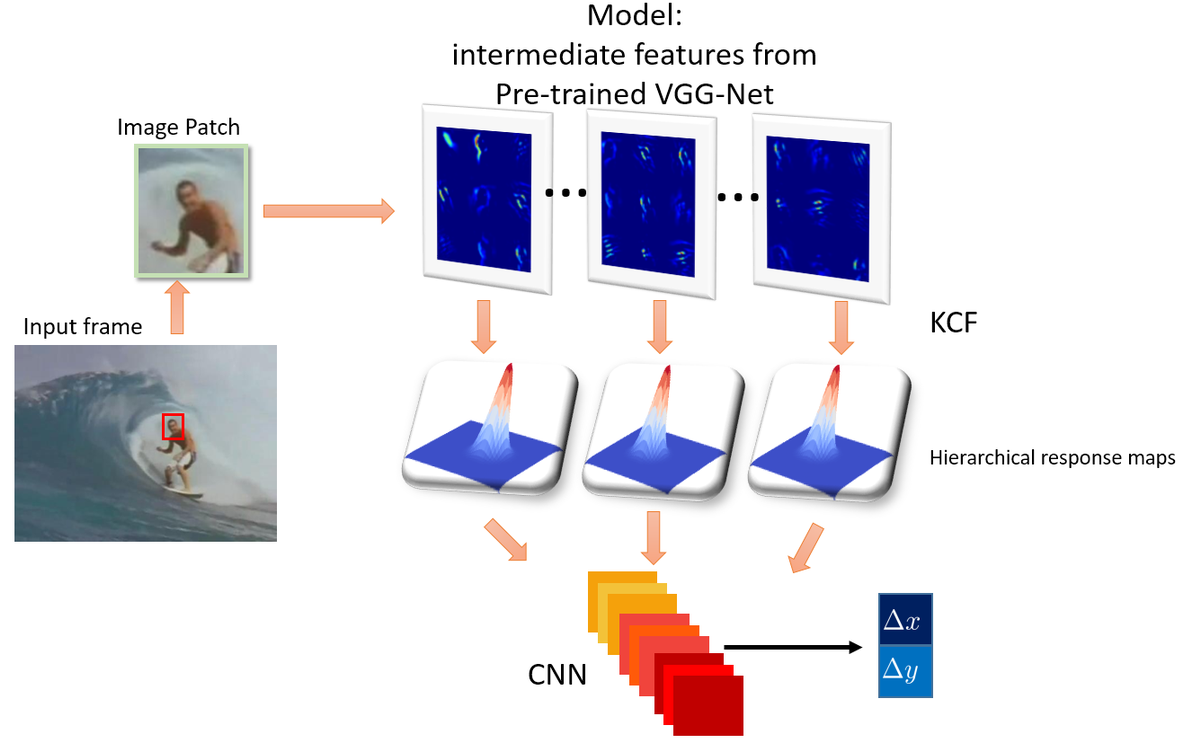
Kernelized Correlation Filters (KCF) have demonstrated excellent performance for high-speed visual object tracking. The key to their success is by observing that the resulting data matrix of translated patches is circulant, the cyclic shifts could be diagonalised with the Discrete Fourier Transform, reducing both storage and computation to obtain the next frame response map. Built upon their seminal work, there has been a plethora of recent improvements relying on convolutional neural network (CNN) pretrained on ImageNet as a feature extractor for visual tracking. However, most of their works rely on ad hoc analysis to design the weights for different layers either using boosting or hedging techniques as an ensemble tracker. In this paper, we go beyond the conventional KCF framework and introduce a novel formulation for training from the hierarchical response maps to directly output the target movement. We interpret the response maps from the hierarchies of convolutional layers as a nonlinear counter part of an image pyramid representation and employ a learning framework for mapping the hierarchical outputs to target translation. Our proposed formulation enables efficient integration of multi-resolution deep feature maps trained from massive online image data and demonstrates its competitiveness over the corresponding counterpart baselines.
-
Multi-modal Metric Learning for Vehicle Re-identification in Traffic Surveillance Environment
ICIP 2017
Abstract
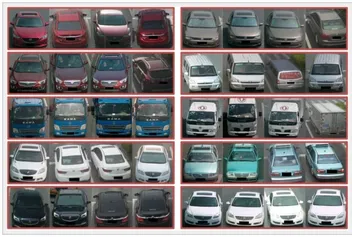
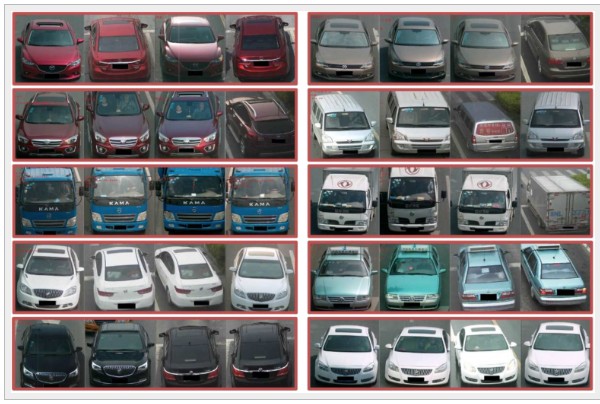
Vehicle re-identification (Re-Id) aims to retrieve the same vehicle captured by disjoint cameras at different time instants from different locations, and is a challenging task mainly due to the high similarity among the captured vehicle images in surveillance environment. With the rapid development of Convolutional Neural Network (CNN), learning-based deep features have been adopted to combine with hand-crafted features to re-identify vehicles in traffic surveillance environment. However, the two kinds of features are in different feature space, and if they are fused directly together, their complementary correlation is not able to be fully explored. To address such an issue, this paper proposes a multi-modal metric learning architecture to fuse deep features and hand-crafted ones in an end-to-end optimization network, which achieves a more robust and discriminative feature representation for vehicle re-identification. The extensive experiments on a large-scale traffic surveillance vehicle dataset demonstrate that our proposed approach substantially outperforms the state-of-the-art methods on vehicle Re-Id.
2016
-
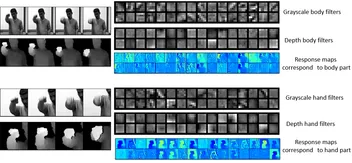
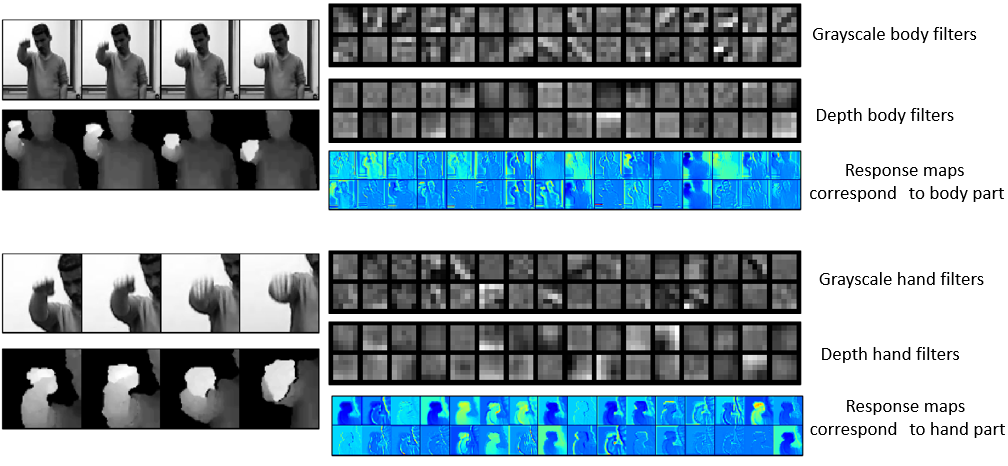
Deep Dynamic Neural Networks for Multimodal Gesture Segmentation and Recognition
TPAMI 2016
Abstract
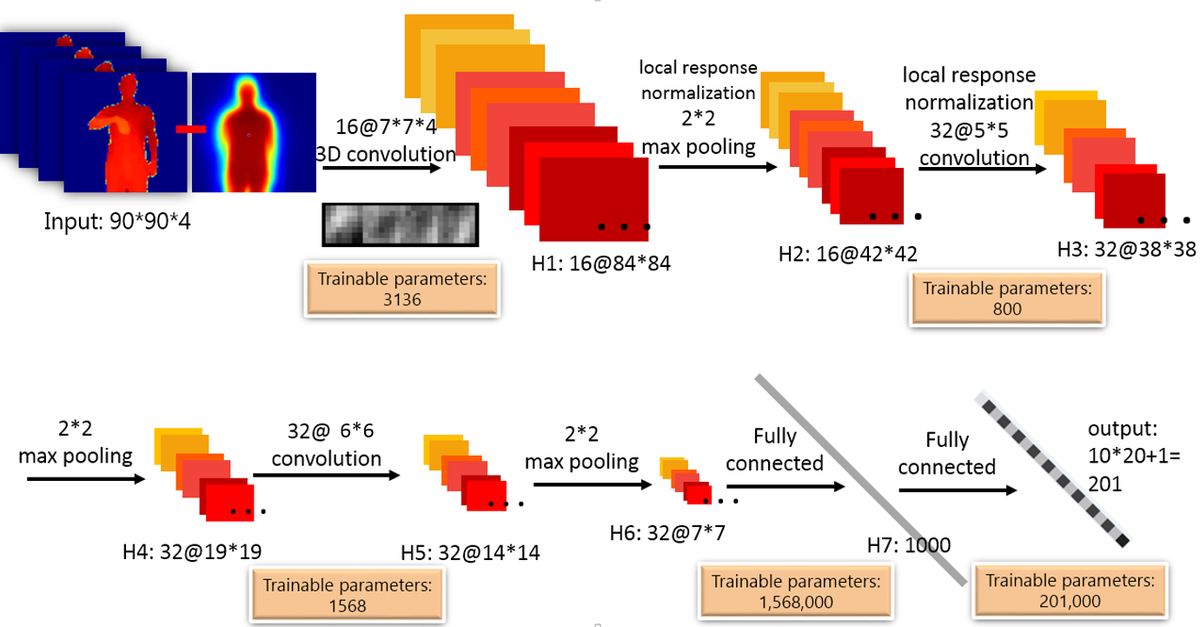
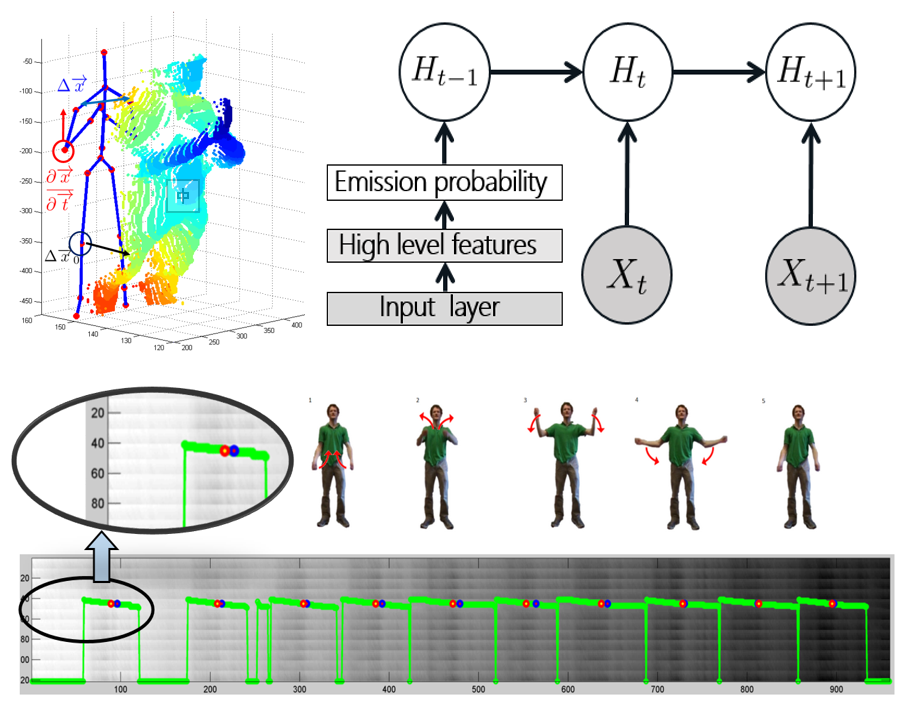
This paper describes a novel method called Deep Dynamic Neural Networks (DDNN) for multimodal gesture recognition. A semi-supervised hierarchical dynamic framework based on a Hidden Markov Model (HMM) is proposed for simultaneous gesture segmentation and recognition where skeleton joint information, depth and RGB images, are the multimodal input observations. Unlike most traditional approaches that rely on the construction of complex handcrafted features, our approach learns high-level spatio-temporal representations using deep neural networks suited to the input modality: a Gaussian-Bernouilli Deep Belief Network (DBN) to handle skeletal dynamics, and a 3D Convolutional Neural Network (3DCNN) to manage and fuse batches of depth and RGB images. This is achieved through the modeling and learning of the emission probabilities of the HMM required to infer the gesture sequence. This purely data driven approach achieves a Jaccard index score of 0.81 in the ChaLearn LAP gesture spotting challenge. The performance is on par with a variety of state-of-the-art hand-tuned feature-based approaches and other learning-based methods, therefore opening the door to the use of deep learning techniques in order to further explore multimodal time series data.
-
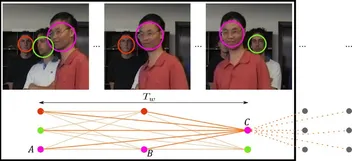
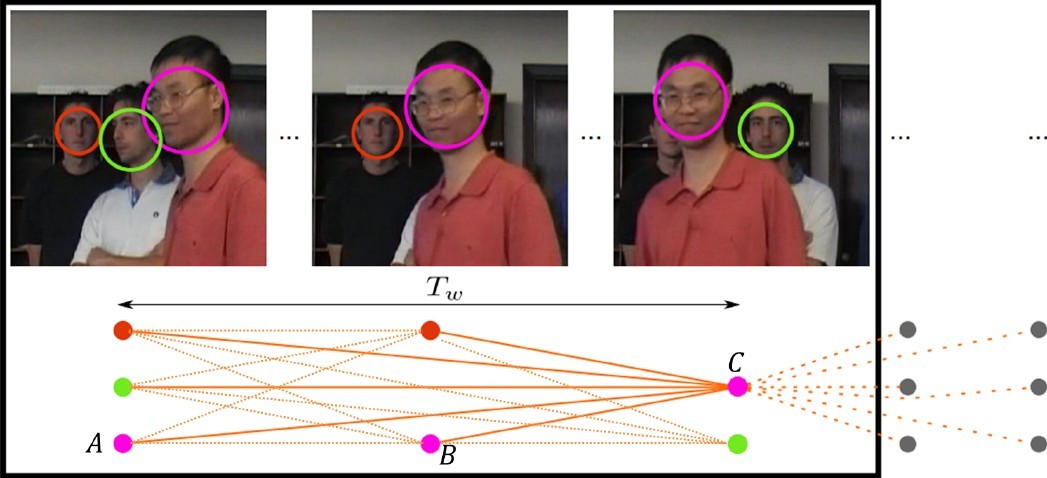
Temporally Subsampled Detection for Accurate and Efficient Face Tracking and Diarization
ICPR 2016
Abstract
Face diarization, i.e. face tracking and clustering within video documents, is useful and important for video indexing and fast browsing but it is also a difficult and time consuming task. In this paper, we address the tracking aspect and propose a novel algorithm with two main contributions. First, we propose an approach that leverages state-of-the-art deformable part-based model (DPM) face detector with a multi-cue discriminant tracking-by-detection framework that relies on automatically learned long-term time-interval sensitive association costs specific to each document type. Secondly to improve performance, we propose an explicit false alarm removal step at the track level to efficiently filter out wrong detections (and resulting tracks). Altogether, the method is able to skip frames, i.e. process only 3 to 4 frames per second - thus cutting down computational cost - while performing better than state-of-the-art methods as evaluated on three public benchmarks from different context including a movie and broadcast data.
2015
-
EUMSSI team at the MediaEval Person Discovery Challenge
MediaEval 2015 Ranked 1st of 9 teams
Abstract
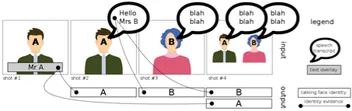
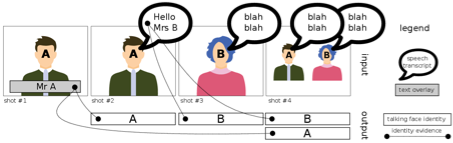
We present the results of the EUMSSI team's participation in the Multimodal Person Discovery task at the MediaEval challenge 2015. Our system ranks first amongst 9 international research teams. The goal is to identify all people who simultaneously appear and speak in a video corpus, which implicitly involves both audio stream and visual stream. We emphasize on improving each modality separately and benchmarking them to analyze their pros and cons.
2014
-
Deep Dynamic Neural Networks for Gesture Segmentation and Recognition
ECCVW 2014
Abstract
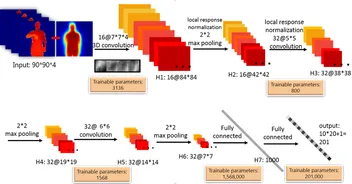
The purpose of this paper is to describe a novel Deep Dynamic Neural Networks (DDNN) for the track 3 of the Chalearn Looking at People 2014 challenge. A generalised semi-supervised hierarchical dynamic framework is proposed for simultaneous gesture segmentation and recognition taking both skeleton and depth images as input modules. First, Deep Belief Networks (DBN) and 3D Convolutional Neural Networks (3DCNN) are adopted for skeletal and depth module accordingly to extract high level spatio-temporal features. Then the learned representations are used for estimating emission probabilities of the Hidden Markov Models to infer action sequence. The framework can be easily extended by including an ergodic state to segment and recognise video sequence in a frame-to-frame mechanism, rendering it possible for online segmentation and recognition for diverse input modules. Some normalisation details pertaining to preprocessing raw features are also discussed. This purely data-driven approach achieves 0.8162 score in this gesture spotting challenge. The performance is on par with a variety of the state-of-the-art hand-tuned-feature approaches and other learning-based methods, opening the doors for using deep learning techniques to explore time series multimodal data.
-
Multimodal Dynamic Networks for Gesture Recognition
ACM MM 2014
Abstract
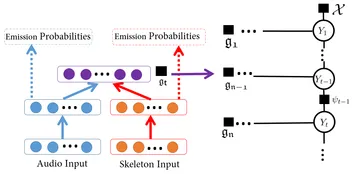
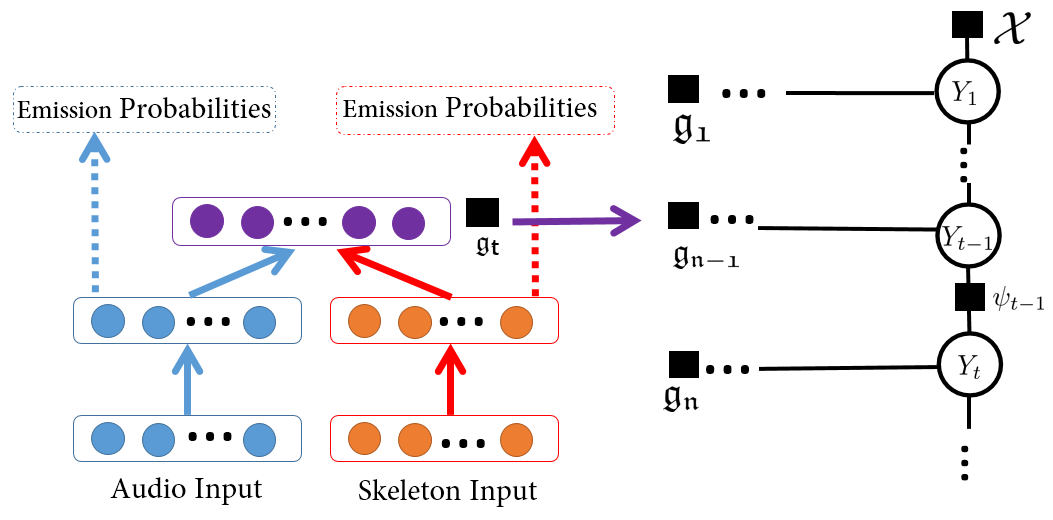
Multimodal input is a real-world situation in gesture recognition applications such as sign language recognition. In this paper, we propose a novel bi-modal (audio and skeleton joints) dynamic network for gesture recognition. First, state-of-the-art dynamic Deep Belief Networks are deployed to extract high level audio and skeletal joints representations. Then, instead of traditional late fusion, we adopt another layer of perceptron for cross modality learning taking the input from each individual net's penultimate layer. Finally, to account for temporal dynamics, the learned shared representations are used for estimating the emission probability to infer action sequences. In particular, we demonstrate that multimodal feature learning will extract semantically meaningful shared representations, outperforming individual modalities, and the early fusion scheme's efficacy against the traditional method of late fusion.
-
Leveraging Hierarchical Parametric Networks for Skeletal Joints Based Action Segmentation and Recognition
CVPR 2014
Abstract
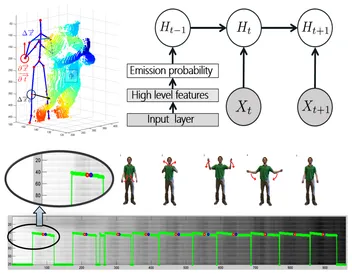
Over the last few years, with the immense popularity of the Kinect, there has been renewed interest in developing methods for human gesture and action recognition from 3D skeletal data. A number of approaches have been proposed to extract representative features from 3D skeletal data, most commonly hard wired geometric or bio-inspired shape context features. We propose a hierarchial dynamic framework that first extracts high level skeletal joints features and then uses the learned representation for estimating emission probability to infer action sequence. Currently gaussian mixture models are the dominant technique for modeling the emission distribution of hidden Markov models. We show that better action recognition using skeletal features can be achieved by replacing gaussian mixture models by deep neural networks that contain many layers of features to predict probability distributions over states of hidden Markov models. The framework can be easily extended to include a ergodic state to segment and recognize actions simultaneously.
-
Learning Deep and Wide: A Spectral Method for Learning Deep Networks
TNNLS 2014
Abstract
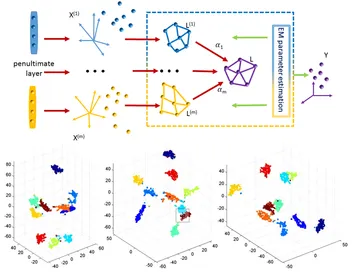
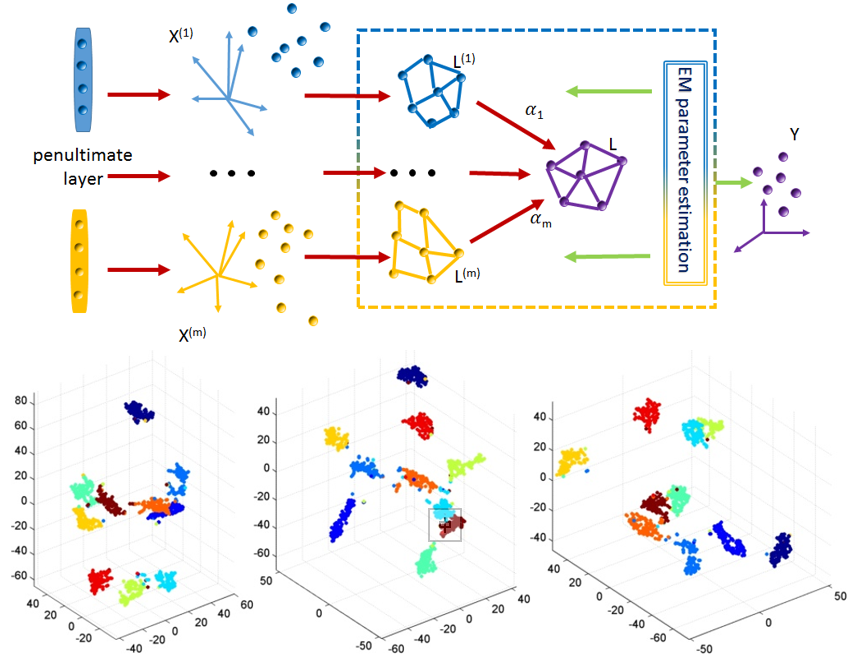
Building intelligent systems that are capable of extracting high-level representations from high-dimensional sensory data lies at the core of solving many computer vision related tasks. We propose the Multi-Spectral Neural Networks (MSNN) to learn features from multi-column Deep Neural Networks and embed the penultimate hierarchical discriminative manifolds into a compact representation. The low dimensional embedding explores the complementary property of different views wherein the distribution of each view is sufficiently smooth and hence achieves robustness given few labeled training data. Our experiments show that spectrally embedding several deep neural networks can explore the optimum output from the multi-column networks and consistently decrease the error rate compared to a single deep network.
2013
-
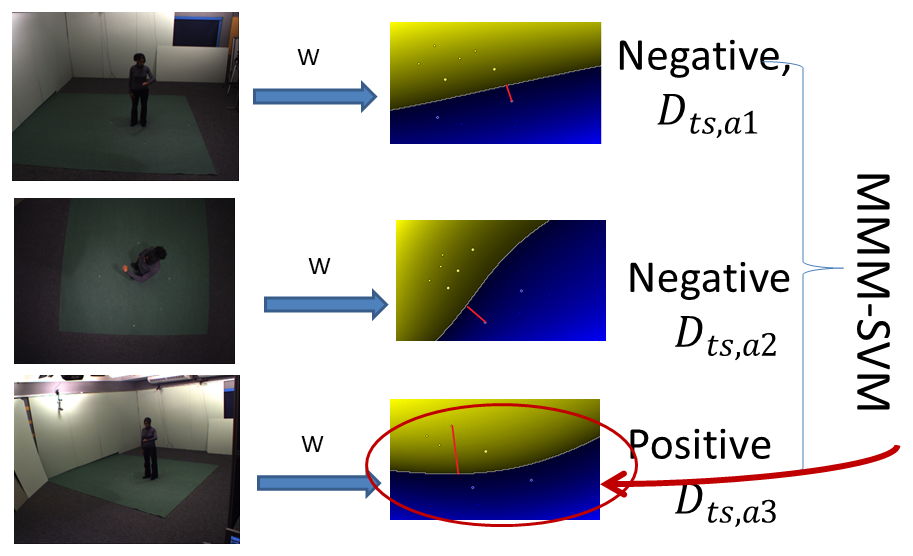
Multi-Max-Margin Support Vector Machine for Multi-Source Human Action Recognition
Neurocomputing 2013
Abstract
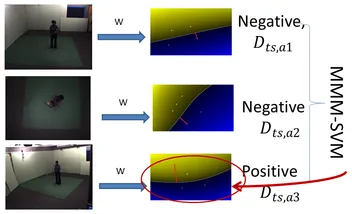
We propose a new ensemble-based classifier for multi-source human action recognition called Multi-Max-Margin Support Vector Machine (MMM-SVM). This ensemble method incorporates the decision values of multiple sources and makes an informed final prediction by merging multi-source feature's intrinsic decision strength. Experiments performed on the benchmark IXMAS multi-view dataset demonstrate that the performance of our multi-view system can further improve the accuracy over single view by 3%-13% and consistently outperform the direct-concatenation method. We further apply this ensemble technique for combining the decision values of contextual and motion information in the UCF Sports dataset and the results are comparable to the state-of-the-art, which exhibits our algorithm's potential for further extension in other areas of feature fusion problems.
-
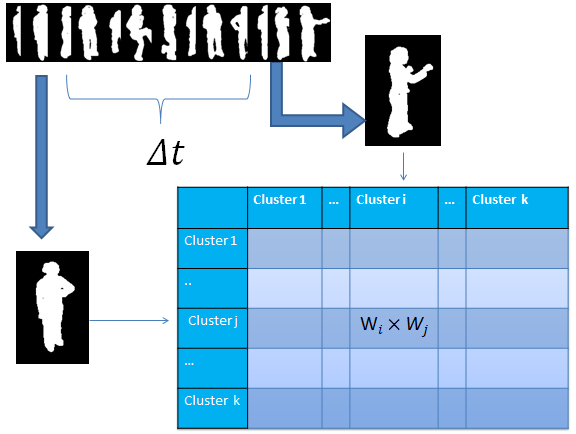
Silhouette Analysis Based Action Recognition via Exploiting Human Poses
TCSVT 2013
Abstract
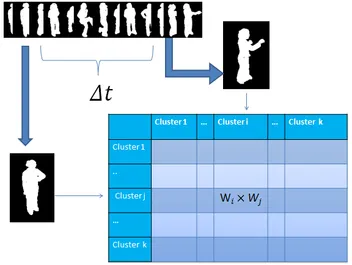
In this paper, we propose a novel scheme for human action recognition that combines the advantages of both local and global representations. We explore human silhouettes for human action representation by taking into account the correlation between sequential poses in an action. A modified bag-of-words model, named bag-of-correlated-poses (BoCP), is introduced to encode temporally local features of actions. To utilize the property of visual word ambiguity, we adopt the soft assignment strategy to reduce the dimensionality of our model and circumvent the penalty of computational complexity and quantization error. To compensate for the loss of structural information, we propose an extended motion template, i.e., extensions of the motion history image (extended-MHI) to capture the holistic structural features. The proposed scheme takes advantages of local and global features and therefore provides a discriminative representation for human actions. Experimental results prove the viability of the complimentary properties of two descriptors and the proposed approach outperforms the state-of-the-art methods on the IXMAS action recognition dataset.
2012
-
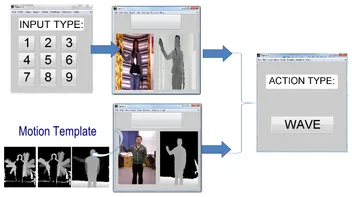
One Shot Learning Gesture Recognition with Kinect Sensor
ACM MM 2012
Abstract
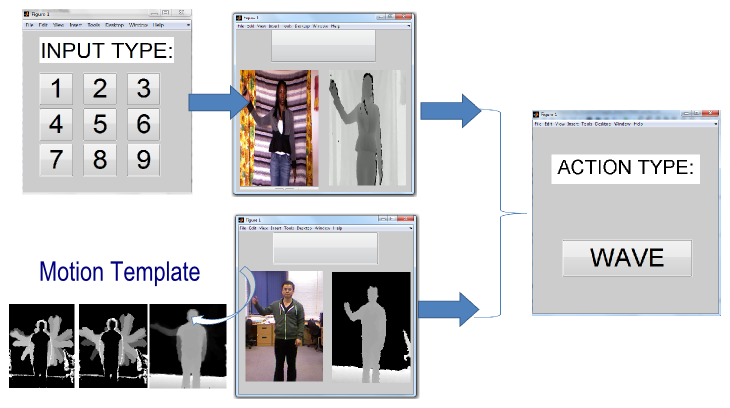
Gestures are both natural and intuitive for Human-Computer-Interaction (HCI) and the one-shot learning scenario is one of the real world situations in terms of gesture recognition problems. In this demo, we present a hand gesture recognition system using the Kinect sensor, which addresses the problem of one-shot learning gesture recognition with a user defined training and testing system. Such a system can behave like a remote control where the user can allocate a specific function using a prefered gesture by performing it only once. To adopt the gesture recognition framework, the system first automatically segments an action sequence into atomic tokens, and then adopts the Extended-Motion-History-Image (Extended-MHI) for motion feature representation. We evaluate the performance of our system quantitatively in Chalearn Gesture Challenge, and apply it to a virtual one shot learning gesture recognition system.
-
One Shot Learning Gesture Recognition from RGBD Images
CVPRW 2012
Abstract
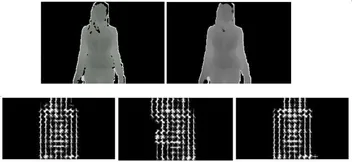
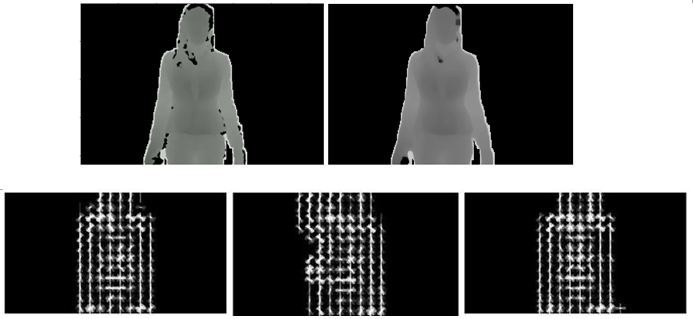
We present a system to classify the gesture from only one learning example. The inputs are duo-modality, i.e. RGB and depth sensor from Kinect. Our system performs morphological denoising on depth images and automatically segments the temporal boundaries. Features are extracted based on Extended-Motion-History-Image (Extended-MHI) and the Multi-view Spectral Embedding (MSE) algorithm is used to fuse duo modalities in a physically meaningful manner. Our approach achieves less than 0.3 in Levenshtein distance in CHALEARN Gesture Challenge validation batches.
2011
-
Action Recognition Using Correlogram of Body Poses and Spectral Regression
ICIP 2011
Abstract
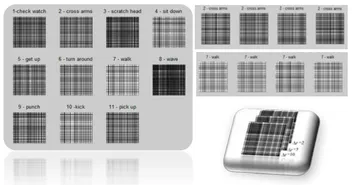
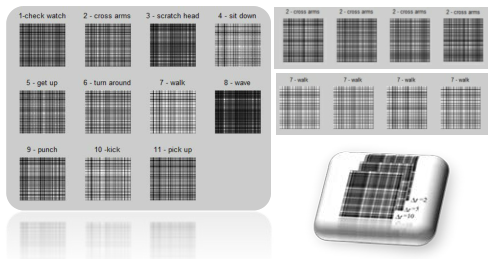
Human action recognition is an important topic in computer vision with its applications range from robotics, video surveillance, human-computer interaction, user interface design, multi-media video retrieval and among others. This paper proposed a novel representation for human action using Correlogram of Body Poses (CBP) which is a descendant of our previous work on Histogram of Body Poses (HBP). In addition, the paper explores a recently proposed subspace learning method called Spectral Regression Discriminant Analysis (SRDA) which aims to speed up the traditional subspace learning methods. Results show that this new representation of human action achieves a rather satisfactory rate and be compared to most state-of-art methods.
No papers match.